
How Color Can Help You Express Your Feelings
If I asked you, “What’s your favorite color?” I imagine you’d have a quick answer. But if I followed up with “Why?” would it take you a moment to reply?
Honestly, I’m not sure I could answer that question. Growing up it was blue, then it was blue-green. I love nature and mountains and rivers. I love peace and tranquility. But what does blue-green say about me as a person?
Our mood and emotions also influence what colors we are drawn to. Do you gravitate to yellow when you’re happy and blue when you’re calm? Or the opposite to bring balance?
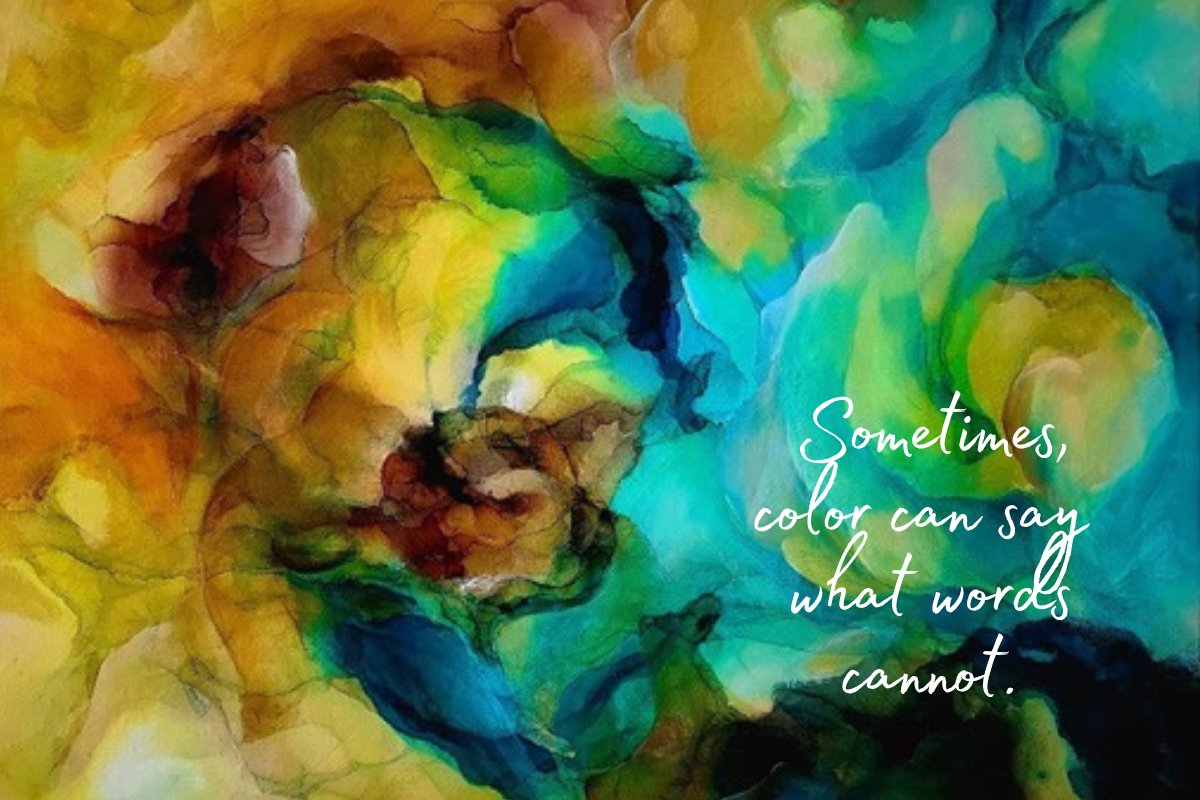
Colors are so much more than primary and secondary. They hold a power charged with emotions. Color can become a way of exploring our emotions, connecting with ourselves, and expressing what is happening inside us.
You Don’t Have to Find the Right Words
There are some moments when we struggle to find the words to describe what we’re feeling. Maybe we’re overwhelmed by several emotions at once. Or perhaps we don’t feel like talking about it.
This is where creative self-expression can offer another doorway.
Instead of asking yourself, "How do I feel?" try asking:
"What color feels like my emotion today?"
There is no right or wrong answer.
You don't have to choose the color that is traditionally associated with an emotion. Your blue doesn't have to mean sadness. Your red doesn't have to mean anger. Your yellow doesn't have to mean happiness.
Your colors belong to you.
Color Can Become an Emotional Language
Think of color as another language you can use to communicate with yourself.
You might create a page using soft greens and blues because you need a sense of peace. You might scribble with black because you're carrying something heavy. You might layer orange, pink, and yellow because you feel energetic and hopeful.
The important part isn't creating something beautiful.
It's noticing what you are drawn to.
When you allow yourself to choose colors intuitively, you may begin to notice patterns in your emotional world.
Sometimes we sit down to dinner and I realize everything I’ve prepared is orange. Or I’ll go a few days in a row wearing blue. My garden will bloom and be almost all yellow.
Perhaps you always reach for certain colors when you're stressed. Maybe your palette changes when you're feeling confident. You might discover that some colors make you feel energized while others help you slow down.
Your Emotional Color Chart
We've all heard associations such as:
Red = anger or passion
Blue = sadness or calm
Yellow = happiness
Green = growth or peace
Purple = creativity or mystery
Orange = energy or excitement
These associations can be interesting, but they aren't rules.
Color is personal.
Your memories, experiences, culture, personality, and relationships can all influence the way you experience color.
Maybe blue reminds you of the ocean and makes you feel peaceful. Maybe it reminds someone else of a difficult time.
That's why there is no universal answer to the question, "What does this color mean?"
The more interesting question is:
"What does this color mean to me?"
Create an Emotional Color Map
Open your journal to a new page and ask yourself, “What am I feeling? What mood and emotions have I been experiencing today?”
Spend a minute drawing curving lines and scribbles in your journal. Select colors that represent how you’re feeling and color in the spaces created by the lines.
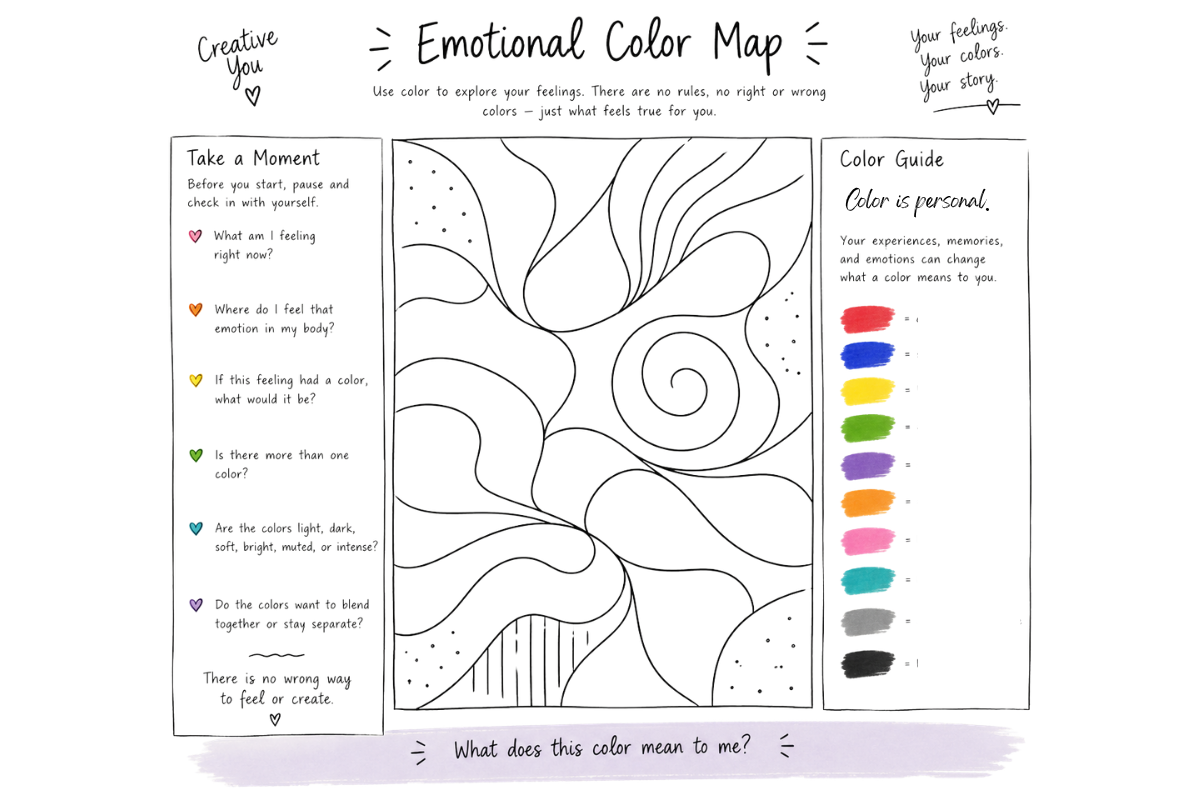
If you’d like to explore our emotional connection to colors in more detail, please check out my Mixed Media Workbook for more information.